
For Engineering Leaders
Why delivery stalls, and how to fix it at the root.
Delivery Challenges Come from Poor Engineering Habits
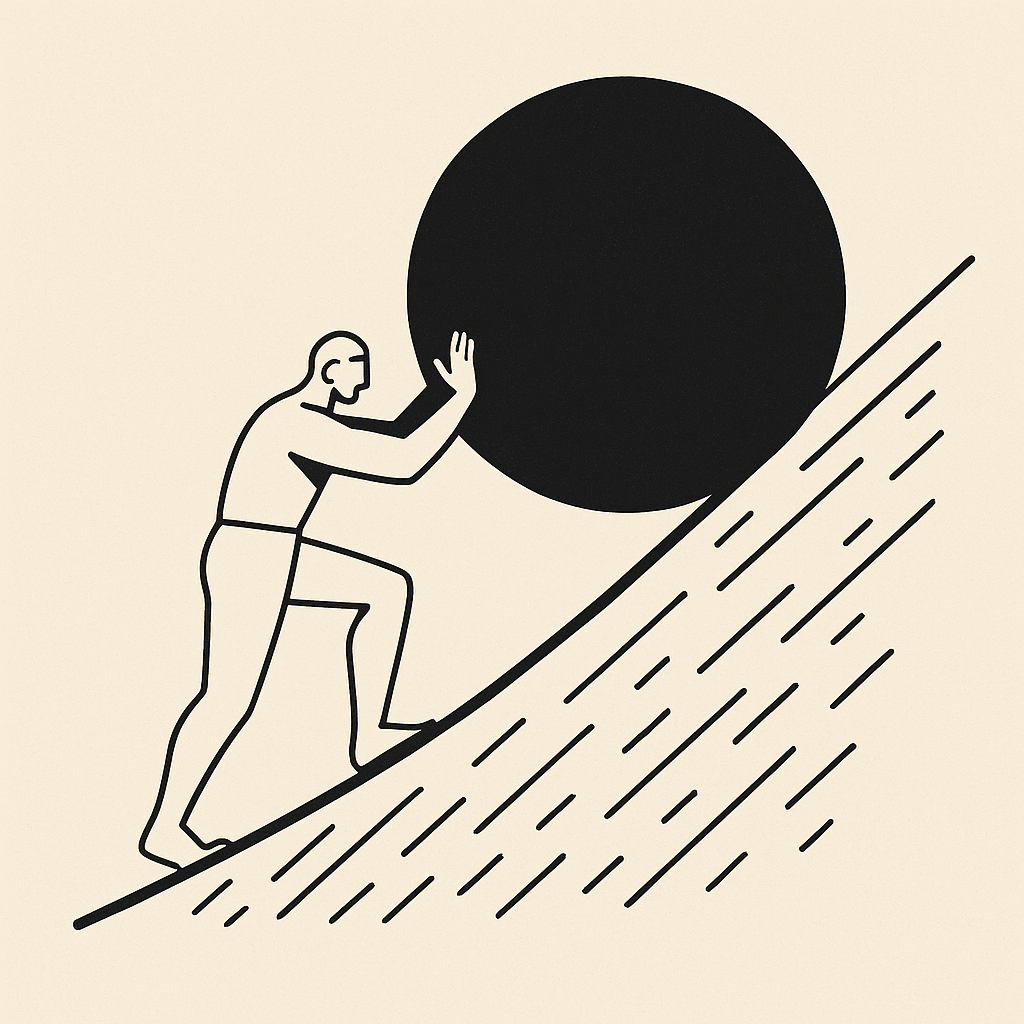
It’s not talent. It’s not tech stack. It’s not tools. It’s the how.
Without the right skills, habits, and decision-making frameworks, teams ship code that works — for now. But as requirements shift, that code collapses under its own weight.
"...misleading feedback."
Your teams are working hard, but the code keeps getting harder to change. Some areas have become so unstable and risky that engineers avoid them entirely. The design is “rusting solid” as teams keep deferring the changes they know they should make.
And maybe you have tests — but they’re brittle, slow, or worse, they give misleading feedback.
As the system grows, delivery grinds to a halt. Everyone points to “the code” as the problem — but no one has a clear path to fix it. Engineers spend their energy working around design issues, only to make the structure even harder to maintain next time.
The problem isn’t really the code. It’s how the code was made.
Teams without embedded technical habits — like Test-Driven Development (TDD), true refactoring, and sustainable design — are doomed to produce systems that resist change.
The Compounding Cost of Weak Habits
When development teams lack the essential skills required to build software — not technology-specific skills, but the core, universal disciplines of sustainable development — they build software that increasingly resists change over time.
Design Friction
Poorly structured designs increase friction. They make it harder to find where to add new functionality and often require engineers to touch multiple parts of the codebase to implement a single change. This not only slows down development, but raises the risk of functionality being partially implemented or failing in unexpected ways.
Weak Tests
Automated tests, if they exist, are often flaky, slow, or misleading. Instead of providing quick, reliable verification, they shift the burden to manual validation — which demands effort but produces little confidence. Worse, most test suites decay over time, becoming so unreliable that developers delete or disable them rather than repair what’s broken.
No Safety to Change
Without the skills to change the structure of a codebase safely, teams defer design improvements they know are needed. The result is predictable: poor decisions made under pressure compound over time with poor decisions made from inexperience.
Decay and Decline
As the system degrades, change becomes more expensive. The same size of change requires more time and effort — and teams begin to fall behind. When that happens, pressure mounts to go faster, but this usually backfires: teams start cutting quality in an attempt to deliver features, ultimately undermining their ability to deliver anything reliably.
Impact on Teams
Eventually, engineers start to burn out. Complaints from customers and stakeholders wear them down. Small changes demand huge effort. The best people on the team begin to disengage — or quietly look elsewhere.
Strong Habits Yield Sustainable Delivery

Teams with the right skills follow a completely different trajectory.
They have strong code-design fluency, so they produce systems that are easy to understand, extend, and maintain. You won’t have any code with a single “expert” — because no part of the system requires one. Developers don’t spend days chasing chain reactions or buried dependencies, because the system has a place for everything, and everything is in its place.
Their test suites are rich, meaningful, and reliable. Instead of occasionally verifying behavior and occasionally misleading the team, each test specifies what the system is supposed to do — and tells you clearly whether that purpose is being met. These purpose-driven tests are long-lasting, so the test suite becomes more valuable over time, not less.
Design changes are safe and routine. Developers make improvements wherever they work, so the structure of the system continually improves. The cost of ownership stays low — not through control, but through habit.
"...safe and routine."
And the result? Delivery speeds up. Engineers increase their pace until they hit a natural maximum, then settle into a rhythm that’s sustainable — no surprises, no decay.
That’s what great really looks like.
Transformation by Design
Producore approaches this problem through our Engineering Excellence Roadmap — a structured system for developing the technical habits software teams actually need. The Roadmap covers everything from requirements intake and sustainable design, to transformative refactoring, Test-Driven Development (TDD), and Behavior-Driven Development (BDD).
Practical Transformation
That Roadmap is delivered through a set of focused, hands-on Programs. Each Program targets a specific skill or technique and is narrow in scope but deep in impact. Programs are designed to produce observable changes in team behavior within weeks — sometimes even before the Program is complete.
A Producore Program is more than training. It’s a structured transformation experience. Yes, it includes training — but also includes pre-planned meetings, diagnostic evaluations, hands-on workshops, and guided team activities. Each Program is supported with practical tools like worksheets, checklists, follow-up literature, and even development environment extensions.
Quick Return on Investment
The result: teams begin seeing the payoff immediately — not months or years later.
Is This What You’re Seeing?

Before taking the next step, ask yourself:
- Do I have one or more teams of strong engineers who keep hitting delivery problems?
- Does it feel like things are slowing down — or already grinding to a halt?
- Are there areas of the code that even my most seasoned engineers hesitate to touch?
- Have I tried to get the team to adopt best practices, but nothing stuck?
- Am I currently considering rewriting a system or component just to get delivery back on track?
If your answer to any of those questions is “yes,” you’re not alone — and we built our Programs to solve exactly this.
Take the Next Step
Let’s talk about what’s slowing your teams down — or use our audit to assess what’s really holding them back.
Not ready for a call? Download the Delivery Health Audit to assess your organization’s technical maturity.