
For Software Developers
It doesn’t have to get harder. You can cultivate sustainability.
Delivery Challenges Come from Bad Habits
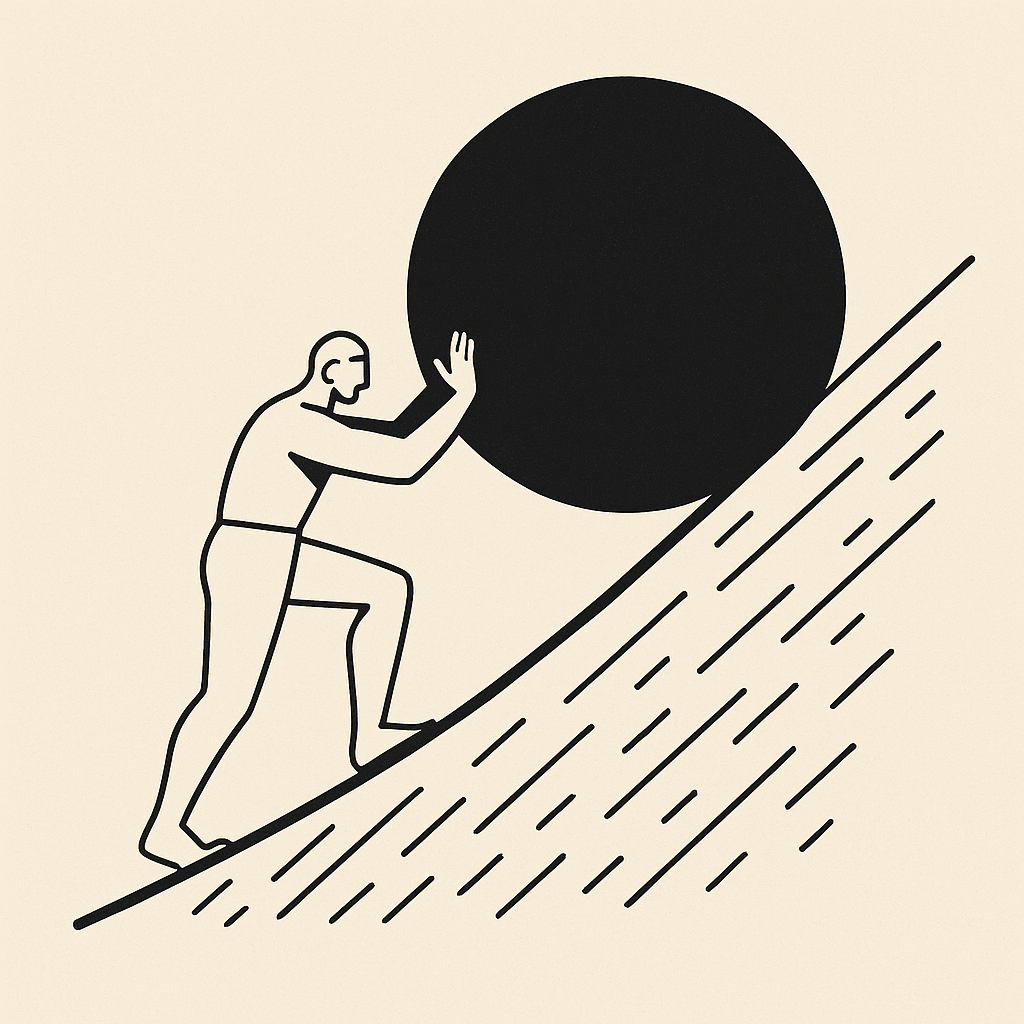
It’s not talent. It’s not tech stack. It’s not tools. It’s the how.
Without the right skills, habits, and decision-making frameworks, you can ship code that works in the short run. But, as requirements shift, that code collapses under its own weight.
"...misleading feedback."
You’re working hard, but the code keeps getting harder to change. Some areas have become so unstable and risky that you and your team avoid them entirely. The design is “rusting solid” as developers keep deferring the changes they know they should make.
And maybe you have tests, but they’re brittle, slow, or worse, they give misleading feedback.
As the system grows, delivery grinds to a halt. Everyone points to “the code” as the problem — but no one has a clear path to fix it. You feel like you spend your energy working around design issues, only to make the structure even harder to maintain next time.
The problem isn’t really the code. It’s how the code was made and how it is being changed now.
Without embedded technical habits — like Test-Driven Development (TDD), true refactoring, and sustainable design — things are just going to keep getting worse.
The Compounding Cost of Weak Habits
The essential skills in software development aren’t tied to your tech stack. It doesn’t matter if you know C#, Java, or Go, at the moment.
The true core skills of a software developer are the universal disciplines of software development. Whether you work on the UI, the back end, or across the full stack, you need the same core skills to keep your software maintainable as it grows.
Design Friction
Poorly structured designs increase implementation effort. They make it harder to find where to add new functionality and often require you to touch multiple parts of the codebase to implement a single change. This not only slows you down, but raises the risk of embarrassment in the form of functionality being partially implemented or failing in unexpected ways.
Weak Tests
Automated tests, if they exist, are often flaky, slow, or misleading. Instead of providing quick, reliable verification, they shift the burden to manual validation, soaking up your time and producing little confidence in the process. Worse, most test suites decay over time. Eventually, they get so bad that you are tempted to disable or delete them rather than fix them when they stop being useful.
No Safety to Change
You know you need to make changes, but sometimes you hold off because you’re afraid you’ll break something. Without true, safe, transformative refactoring, developers often defer design improvements they know are needed. As a result, the code gets just a little bit worse — just a little harder to maintain — each time a design change is postponed to a “later” everyone knows will never come.
Decay and Decline
As the system degrades, change becomes more expensive. The same size of change requires more time and effort — and you begin to fall behind. When that happens, pressure mounts to go faster, forcing you to start cutting quality in an attempt to deliver features… further undermining your ability to deliver features.
Impact on You
The impact goes further than just how a product evolves. There’s a personal toll to be paid. These forces lead to burnout, embarrassment, and outright despondency. Bad code and weak practices turn the company that was supposed to host your career into the same company you can’t wait to grow out of.
Strong Habits Yield Sustainable Delivery

Teams with the right skills follow a completely different trajectory.
They have strong code-design fluency, so they produce systems that are easy to understand, extend, and maintain. Nobody needs to be the single expert on a part of the code, because no code needs an expert. You don’t spend days chasing chain reactions or buried dependencies, because the system has a place for everything, and everything is in its place.
Your test suites are rich, meaningful, and reliable. Instead of occasionally verifying behavior and sometimes misleading you, each test specifies what the system is supposed to do — and tells you clearly whether that purpose is being met. These purpose-driven tests are long-lasting, so the test suite becomes more valuable over time, not less.
Design changes are safe and routine. You make improvements wherever and whenever you work, so the structure of the system continually improves. The pace of delivery stays high, but not because of pressure from above. Your speed and accuracy comes from your habits.
"...safe and routine."
And the result? Delivery speeds up. Your output increases until you hit a natural maximum, then settle into a rhythm that’s sustainable. Stakeholders don’t micromanage and don’t pressure you to go faster, because they don’t feel the need to.
Whether your job is a waypoint in a larger strategy, or a stable home for a lifelong career, you earn the recognition you deserve because you are truly one of the great developers in your organization.
Where to Start

You can stand out from the crowd and start making a difference at your organization. You don’t have to persuade anyone else on your team to work differently and you don’t have to talk your VP into buying a big transformation package.
You don’t have to wait. You can start now.
The first change to make is to implement true refactoring.
Refactoring is the rigorous process of applying incremental changes to design that are guaranteed to preserve behavior.
And it’s something you can do on your own.
It doesn’t matter if your code has tests, if anyone else is interested in TDD, or if your architect insists on a particular pattern.
It always works. Everywhere. Refactoring isn’t a special trick for certain languages or teams — it’s the disciplined act of changing structure without changing behavior. That makes it universal.
You, personally, can transform your career by learning how to transform code.
Is This What You’re Seeing?

Before taking the next step, ask yourself:
- Is it sometimes hard to deliver features?
- Is our pace of delivery slowing down grinding to a halt?
- Are there areas of the code that I hesitate to touch?
- Are people talking about rewriting a system or component because it’s hard to maintain?
- Are there areas of the code that require more work than they should whenever I have to touch them?
- Are there parts of the code with a high risk of creating bugs when I change them?
If your answer to any of those questions is “yes,” you’re not alone — and we have public courses to solve exactly this.
Take the Next Step
Not ready for a webinar? Check out our resources for developers, instead.